Key takeaways
- Water-side work usually runs about $3 to $12 per square foot depending on how dirty the water is, plus extraction.
- Water category and class both matter. Category is how clean the water is, class is how deeply it soaked in.
- Location matters: crawlspaces and basements cost more per square foot than an open room.
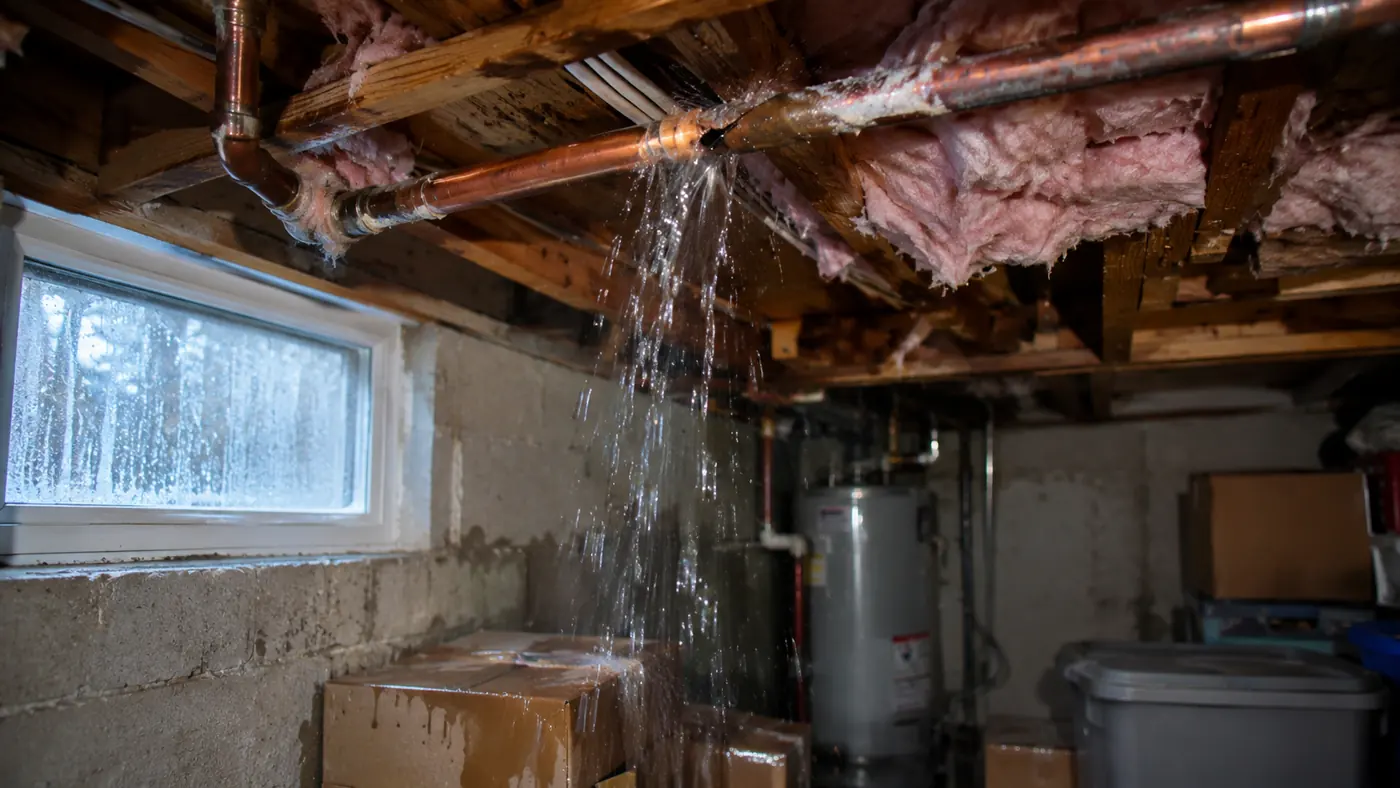
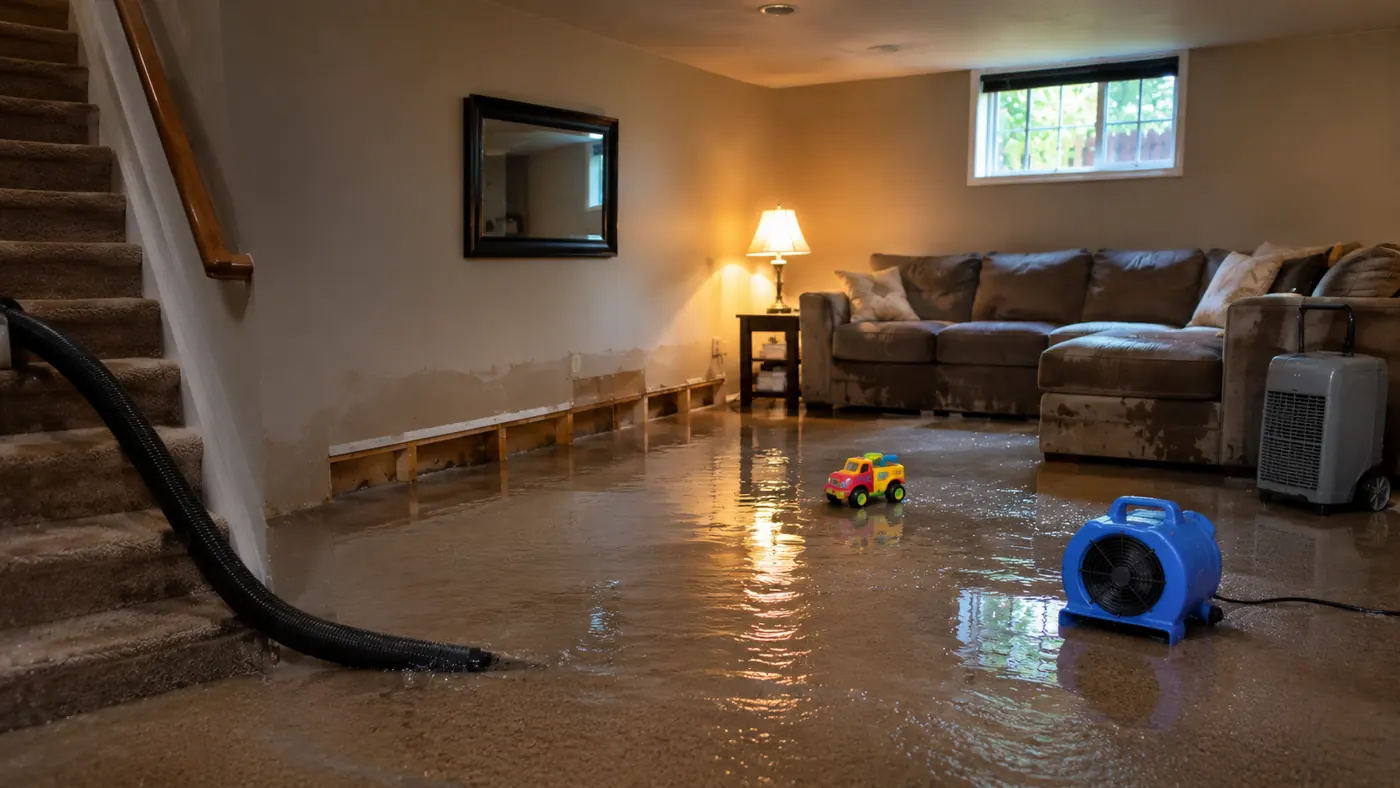
- Time is the biggest controllable cost. Water found in the first hours costs the least to fix.
- Two quotes can differ by thousands because they include different things. Compare what is included, not only the total.
- Repairs such as drywall, paint and flooring are priced separately after the structure is dry.
People usually look up what water damage restoration costs at a bad moment: there is water on the floor, someone has said a number out loud, and it is hard to tell whether the number is reasonable. This guide explains how those numbers are built. It covers what a restoration bill is made of, how water type, location and time change the price, what drying equipment and standards mean, how to compare quotes, and what costs people tend to forget.
In the Kennesaw area, the water side of a restoration job usually runs from about $3 to $12 per square foot, depending mostly on how dirty the water is, with extraction priced on top and repairs priced separately after the structure is dry. A small clean-water leak caught within a day can cost under $2,000. A flooded crawlspace or a sewage backup can run well into five figures. The figures here are planning ranges drawn from published cost guides and a set of working assumptions, not quotes. Only a person with a moisture meter in the house can give a real number.
What a restoration bill is made of
A water damage bill is not one item. It is a stack of separate jobs, and different companies bundle them differently. Understanding the stack is the most useful thing a homeowner can do before comparing prices.
Extraction
Pumps and extractors remove standing water and pull water from carpet and pad. See water extraction. In the planning model used on this site it is $0.75 to $2.00 per square foot of wet area.
Drying and monitoring
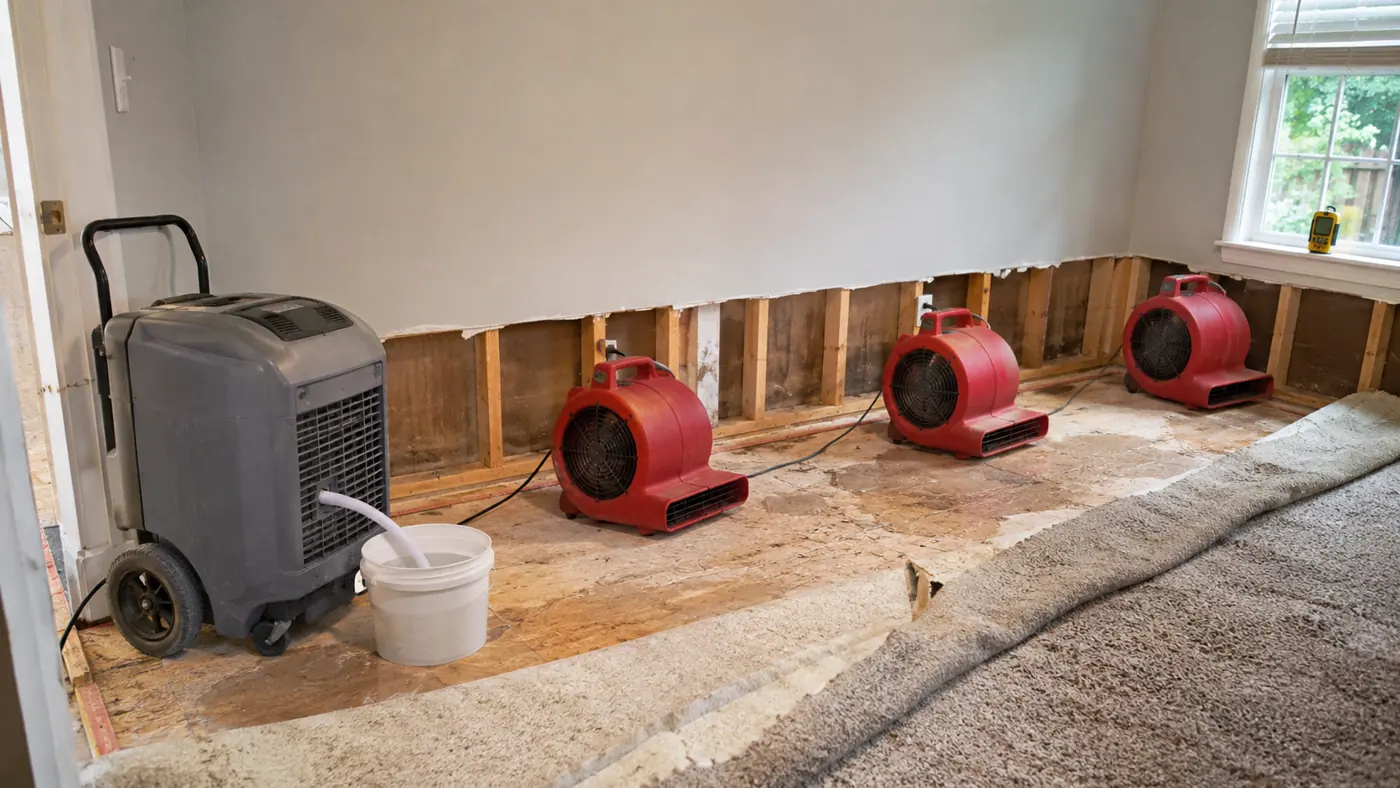
Air movers and dehumidifiers run for days while a technician takes moisture readings on each visit. This is usually the largest line. See structural drying.
Removal of wet material
Carpet pad, soaked drywall, wet insulation and flooring that cannot be dried are taken out so the structure dries faster and mold has nothing to feed on.
Cleaning and treatment
Surfaces are cleaned and treated with an antimicrobial, more thoroughly when the water was not clean.
Repairs
New drywall, texture, paint, flooring and trim. These are priced after drying, because nobody can price a repair until the scope of what came out is known.
Extras people forget
Moving and storing contents, temporary housing, testing, disposal fees, and the plumber or roofer who fixes the source.
How restoration companies price the work
Three pricing methods are common, and they produce very different looking quotes for the same job.
| Method | How it works | What to watch for |
|---|---|---|
| Per square foot | A rate multiplied by the affected area, often by water category | The area is the whole question. Ask how it was measured and whether it can grow. |
| Per equipment per day | Each air mover and dehumidifier is billed daily for the days it runs | The number of days and units drives the total. Ask how those are decided and documented. |
| Time and materials | Labor hours and materials billed as used | Open ended. Ask for a not-to-exceed figure or a written scope with checkpoints. |
None of these is dishonest by itself. Problems come from a quote that does not say which method it uses, or that mixes methods without explaining. A written scope that lists the rooms, the materials to be removed, the equipment and the expected days is the best protection, because it can be checked against the moisture readings later.
Cost by type of water
Water is sorted into three categories, and the category is the biggest single driver of the per-square-foot rate. Category 1 is clean water from a supply line, a tub overflow or a failed water heater. Category 2 is gray water from a washing machine, a dishwasher or a sump overflow. Category 3 is black water, meaning sewage or flood water from a creek or river. The dirtier the water, the more porous material has to be removed instead of dried, and the more protective gear, containment and disposal the work needs. Clean water that sits long enough can degrade into a worse category, which is one more reason time matters.
| Water type | Typical source | Planning range for drying and monitoring |
|---|---|---|
| Clean (category 1) | Supply line, tub overflow, early rain through a roof leak | $3.00 to $5.00 per sq ft |
| Gray (category 2) | Washer, dishwasher, sump overflow | $4.00 to $7.00 per sq ft |
| Black (category 3) | Sewage, creek or river flood water | $7.00 to $12.00 per sq ft |
For comparison, published 2025 cost guides put clean-water mitigation at roughly $3 to $4.25 per square foot, gray water at roughly $4.10 to $6.50 and sewage at roughly $7 to $7.50, and several note that sewage jobs often run two to three times a clean-water job. The planning ranges above are wider to allow for access and for time spent sitting. Extraction, removal of wet material and treatment are added as separate lines.
Planning ranges per square foot, side by side
Each bar spans the low and high end of the range. Further right and wider means more cost.
Scale runs from $0 to $26 per square foot. Mold removal is a separate job, shown for comparison. Planning ranges only.
Water classes and why they matter for drying
Water category describes how clean the water is. A separate idea, class, describes how much and how deeply the water has soaked in. The industry standard for water damage restoration, IICRC S500, uses four classes. Class 1 is the least: a small area with little absorbed water. Class 2 covers a whole room of carpet and cushion with water that has wicked up the walls. Class 3 is water that came from above and soaked ceilings, walls and insulation. Class 4 is specialty drying for materials that hold water stubbornly, such as hardwood, plaster and concrete.
Class affects the drying plan more than the category does. A Class 4 job needs more equipment and more days than a Class 1 job of the same floor area, even when both start with clean water. When a quote seems high for a small area, ask which class the company assigned and why.
Equipment, in plain terms
- Air movers
- High-velocity fans that push air across wet surfaces so water evaporates. Several per room is normal.
- Dehumidifiers
- Machines that pull moisture out of the air so the drying air can keep absorbing more. Low-grain-refrigerant (LGR) units are the common type for structural drying.
- Moisture meters
- Pin and pinless meters that read the moisture content of drywall, wood and other materials. Readings are compared with unaffected material in the same building.
- Thermal imaging camera
- Shows cold, wet areas behind a wall that look normal from the room. It finds water. It does not measure how wet the material is.
- Air scrubbers
- HEPA filtration units used when contamination or mold makes the air a concern.
- Extractors and pumps
- Truck-mount or portable extractors for carpet and hard floors, and submersible pumps for standing water.
Cost by where the water is
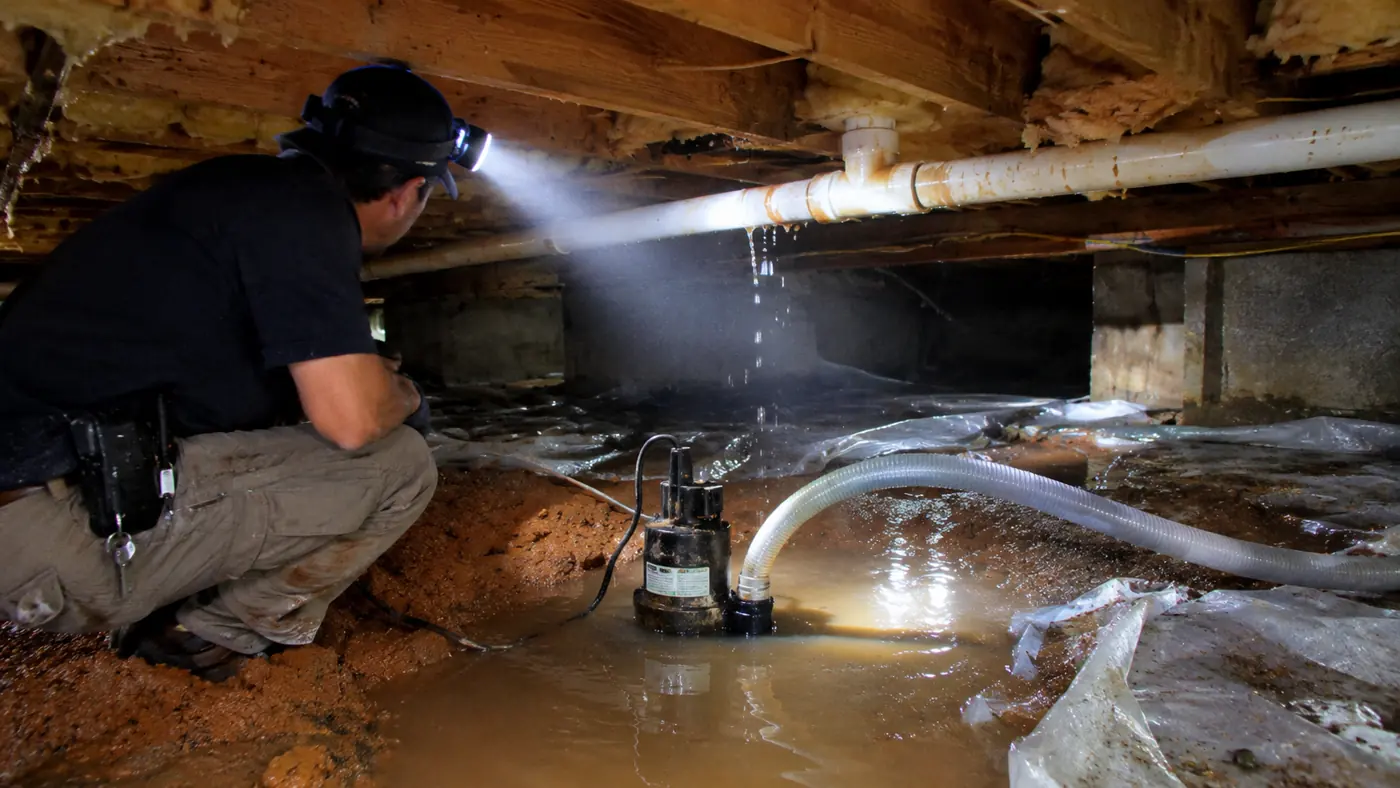
The same water costs more in some places than others. A crew works fast in an open room and slowly in a crawlspace where they lie in red clay mud. Finished basements cost more because there is more to remove and protect. In the planning model used here, location multiplies the drying line like this:
| Where the water is | Effect on the drying line | Why |
|---|---|---|
| One room | 1.0x | Open access, one work area |
| Several rooms | Up to 1.15x | More setup and more equipment |
| Basement | 1.0x to 1.25x | Stairs, finished walls, possible sump issues |
| Crawlspace | 1.1x to 1.4x | Low clearance, mud, a vapor barrier that traps water |
| Ceiling or upper floor | 1.0x to 1.3x | Water comes down through floors and walls |
These multipliers are working assumptions, not published rates. They exist because a crawlspace job takes longer than a living room job of the same size. The water damage cost calculator shows how they combine with the rest for a given square footage.
Why time costs money
Clean water that sits for a day or two starts behaving like gray water, and wet drywall and pad that stay wet for days have to come out instead of being dried in place. In the planning model the drying line is multiplied by up to 1.25 for water found after one to three days, and up to 1.6 for water found after three days or more. The cheapest water damage job is almost always the one where extraction starts in the first few hours.
What time does to a water damage bill
Each step below usually adds cost.
How long drying takes and how it ends
Most clean-water jobs run three to five days of equipment. Crawlspaces, hardwood and thick framing take longer. A job should end when moisture readings in the affected material match readings from unaffected material of the same kind in the same building, not on a fixed day. Good practice is a technician visit each day to take readings, adjust equipment and remove units from areas that have reached dry. A final set of readings in writing is the proof that the job is finished.
Drying that stops early is a common source of later problems: musty smells, cupped floors, mold behind a wall. It is worth asking how many days of equipment the quote assumes, and what happens if the readings are not dry by then.
Worked examples
Numbers are easier to trust when the build-up is visible. These are planning ranges for the water side of the job. Repairs are not included.
| Scenario | Planning range |
|---|---|
| 300 sq ft finished basement, clean supply-line leak found within the first day, carpet and pad out, drywall wet under 2 ft | $1,650 to $3,700 |
| 600 sq ft basement, clean standing water, carpet out, drywall cut under 2 ft | $3,300 to $7,400 |
| 600 sq ft basement, clean water found within the first day, carpet out, drywall cut over 2 ft | $3,700 to $8,300 |
| 1,000 sq ft crawlspace, clean water found after 1 to 3 days, wet insulation out | $4,650 to $12,600 |
| 3,000 sq ft office floor, clean water over several areas, carpet tile out, flood cut under 2 ft | $17,400 to $42,450 |
To show how the first line is built, a 300 square foot finished basement breaks down to about $250 to $600 for extraction, $900 to $1,900 for drying and monitoring, $450 to $1,050 for removal of pad and lower drywall, and $50 to $200 for antimicrobial treatment. That adds up to $1,650 to $3,700. New drywall, paint and carpet come after.
Why two quotes for the same flood can differ so much
One company may price extraction only. Another includes drying and monitoring. One may count the whole basement and another only the wet part. One may include removing wet drywall and another leave it to the owner. A low number that leaves out drying is not a low number. It is a smaller job priced as if it were the whole job.
Questions worth asking every company
- What is included: extraction, drying, removal, cleaning, treatment?
- How was the affected area measured, and what would make it bigger?
- How many days of equipment are in the price, and what happens if the room is not dry on day three?
- How many visits for moisture readings, and will the readings be given in writing?
- Is anything billed per piece of equipment per day?
- What would make the price go up, and how will that be communicated?
- Who does the repairs, and how are they priced?
- Will the company work with the insurer, and what records does it keep?
Warning signs in a quote
- No written scope, only a total.
- A price given over the phone with no moisture readings taken.
- Pressure to sign a contract or assignment of benefits before the water is even stopped.
- No mention of how drying will be verified.
- A price far below every other quote, with extraction or drying left out.
- An unwillingness to put equipment counts and expected days in writing.
What pushes the price up and what keeps it down
Pushes it up
- More square feet of wet material
- Dirtier water, such as gray or sewage
- More time between the leak and the call
- Tight access, such as a low crawlspace
- Hardwood, finished walls and wet insulation
- Night and weekend calls
Keeps it down
- Starting within the first day
- Shutting off the water at the main
- Taking photos before anything moves
- Clearing a path to the wet area
- Telling the crew what the water was and where it came from
Repairs are a separate price
Once the structure reads dry, repairs begin: new drywall, texture, paint, flooring and trim. These are priced after drying because the scope depends on what had to come out. Drywall replacement runs about $1.50 to $3.00 per square foot in the planning guides used for this article, before paint. Flooring varies too much to give one number. Some owners hire the restoration company for repairs and some hire a separate contractor. One company doing both means the crew that dried the house knows what was removed. Two companies can mean better price competition. Either way, a written scope of what came out helps whoever does the repair.
Costs that sit outside the restoration bill
- The source repair. A plumber fixes a split pipe, a roofer fixes a leaking roof, a drainage contractor fixes grading. Restoration does not include these.
- Contents. Moving, cleaning, storing or replacing furniture and belongings.
- Testing. Mold testing or air testing is priced by the tester.
- Temporary housing. If the home cannot be lived in, some policies cover living costs.
- Mold. Published guides put mold remediation at about $10 to $25 per square foot, with crawlspaces and attics often higher. The mold removal cost calculator explains the factors.
How insurance changes what you pay
Many homeowners policies cover sudden and accidental water damage and exclude slow leaks and surface flood water. What you pay out of pocket depends on the deductible and the coverage, not just the invoice. Dated photos, moisture logs and an itemized scope make a claim go more smoothly. The whole process is covered in the guide to water damage insurance claims for Georgia homeowners.
What is different about pricing in Kennesaw
Kennesaw sits in the Piedmont, where the common soils have a clayey, reddish subsoil that drains slowly. Water that gets into a crawlspace or basement in this kind of ground does not drain away on its own, so jobs here often include pumping and drying down to the dirt or slab. That is part of why crawlspaces and basements carry a multiplier. The guide to wet crawlspaces on Georgia red clay explains the soil in more detail.
The other local driver is cold weather. In December 2022 the Atlanta airport dropped to 8 degrees Fahrenheit and Cobb County reported hundreds of homes and businesses with water damage from burst pipes. After a freeze like that, restoration crews across the area are busy, and waiting costs more than moving early. See the burst pipe guide for how those events unfold.
The same patterns show up across the nearby towns. Local notes on housing, water and terrain are on the pages for Acworth, Marietta, Woodstock, Fair Oaks, Emerson and Smyrna.
Questions people ask about cost
Can a real price be given over the phone?
A planning range can, from a description. A real number needs a moisture check and a written scope, because the wet area is usually bigger than what can be seen.
Is extraction included in the drying price?
It depends on the company. Some bundle it and some list it separately. Always ask whether a quote includes it.
How long does drying take?
Most clean-water jobs run three to five days of equipment. Crawlspaces, hardwood and thick framing take longer. The job ends when the readings say dry.
Does a small leak cost much less?
Often yes, if it is caught early on a hard floor. A small leak that soaks into pad and drywall can cost nearly as much as a larger one that was dried right away.
Will the price change after work starts?
It can, if hidden wet material turns up behind a wall or under a floor. A good quote says what would change the price and how the owner will be told.
Is it cheaper to dry it myself?
For a small spill on a hard floor, yes. For wet pad, wet drywall or anything wet longer than a day, fans move damp air around, and meters are needed to know when it is dry.
Sources: Angi water damage cost guide; Fixr water damage restoration cost; HomeAdvisor.
About this guide. Written by the Kennesaw DryOut team for homeowners in Kennesaw and Cobb County, Georgia. It is general information, not professional, legal or insurance advice, and figures are planning ranges, not quotes. Last updated March 12, 2026.