Key takeaways
- Many Georgia houses were built for mild winters, so lines in crawlspaces, garages and exterior walls are exposed.
- The pipe usually splits as it freezes but does not leak until it thaws, which is why bursts are found after the cold.
- No pipe material is freeze-proof. Insulation and keeping lines in the warm part of the house matter most.
- Before a freeze: insulate, disconnect hoses, open cabinet doors, drip a faucet, keep the heat on and know the shutoff.
- When a pipe bursts: shut off the main, make it safe, call a plumber, then start cleanup.
- Never use an open flame to thaw a pipe.
Most Georgia winters are mild enough that a frozen pipe feels like something that happens elsewhere. Then a night like Christmas Eve 2022 arrives, and hundreds of homeowners in Cobb County find out that the pipes in their crawlspace, garage or exterior wall were never built for it. This guide covers the whole picture: why Georgia houses freeze, how a pipe actually fails, what to do before a cold night, what to do when a pipe freezes or bursts, who to call and in what order, what cleanup involves, and how to prevent it next time.
It is meant to be read once, before the cold arrives. A printable version of the key steps is in the frozen and burst pipe checklist.
Why Georgia pipes freeze when they should not
Many houses in the Kennesaw area were built from the 1980s through the 2000s for mild winters. Water lines run through vented crawlspaces, exterior walls, garages and attics, where they get little protection when temperatures drop. Hose bibs freeze if hoses stay connected. A line in an uninsulated exterior wall can freeze on a night that does not look all that cold.
The reason is simple. In colder states, builders put water lines inside the heated part of the house and bury service lines deep. In mild climates, the cheaper and easier route is through the crawlspace or an outside wall, because freezing is rare. When it does happen, the whole system is exposed at once.
How a pipe actually fails
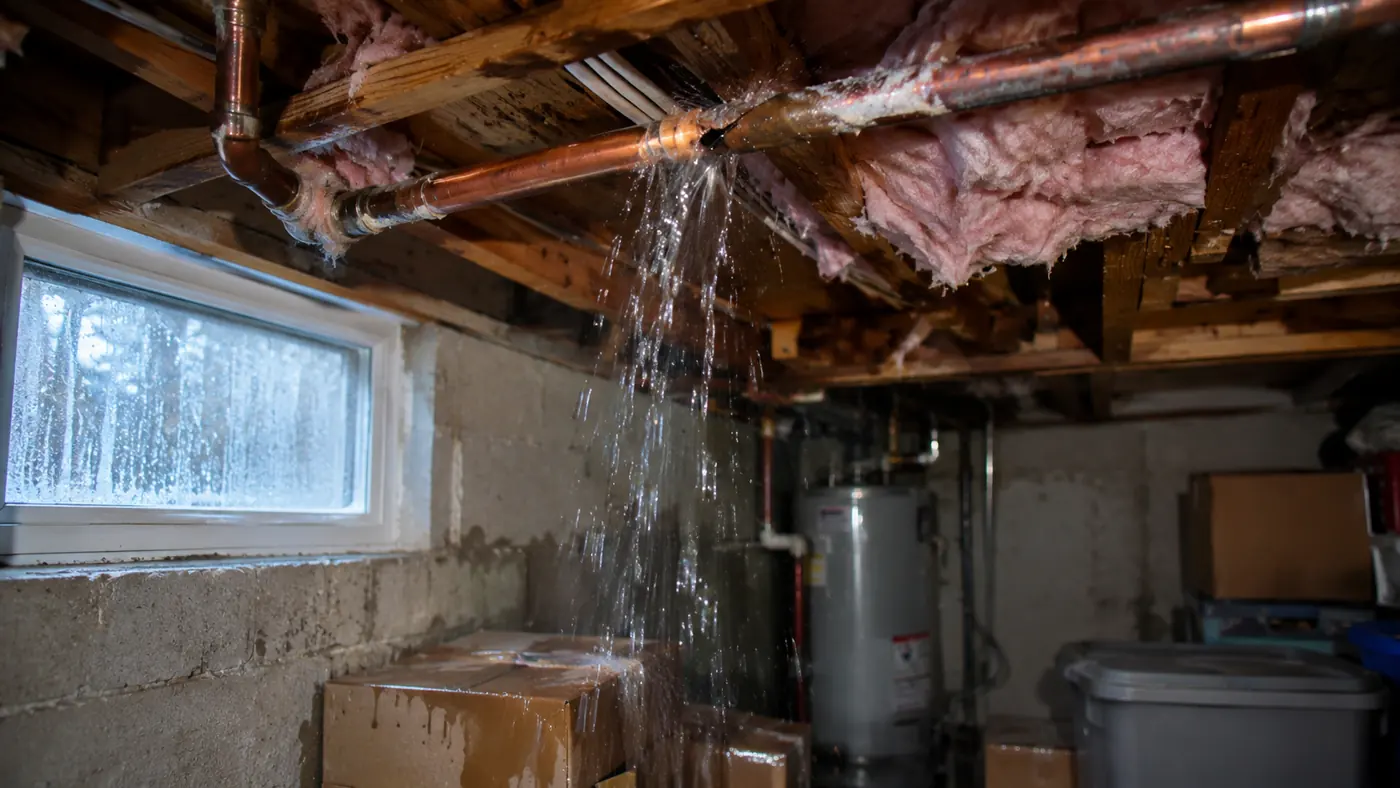
When water freezes it expands. The ice usually does not split the pipe where it forms. As ice builds up in one section it pushes unfrozen water toward a closed faucet, and the pressure between the ice plug and the faucet rises. The pipe fails at its weakest point, often in a place no one can see. Because the water inside is frozen, nothing leaks until it thaws.
From a cold night to a flooded basement
This is why a burst pipe is usually found after the freeze, not during it.
How different pipe materials behave
| Material | Where it is common | Behavior in a freeze |
|---|---|---|
| Copper | Most houses built before the 2000s, and many since | Rigid. Tends to split lengthwise when ice builds pressure |
| PEX (flexible plastic) | Newer houses and repipes | Expands a little more than copper before failing, so it is less likely to split, but the line can still freeze and block |
| CPVC | Many houses from the 1990s onward | Can become brittle in the cold and crack |
| Galvanized steel | Older houses | Rigid and often corroded inside, so it can fail at weak spots |
No material is freeze-proof. Insulation and keeping lines in the warm part of the house matter more than which pipe it is.
What Georgia freezes have actually looked like
It is easy to forget how cold it can get here. Two events show the range.
- January 1985. Atlanta's airport dropped to minus 6 degrees Fahrenheit and then minus 8 on consecutive mornings. Crawlspace lines in 1980s and 1990s houses have rarely been tested against a night that cold.
- December 2022. The airport reported 8 degrees on Christmas Eve, the coldest the city had been since January 2014, after three days of sub-freezing weather. Cobb County reported hundreds of homes and businesses with water damage from burst pipes, mostly found after the thaw.
Kennesaw's freeze season at a glance
From November through March the average coldest night of the month at the Atlanta airport is below freezing. These are the months to protect pipes.
Figure shown is the average of each month's coldest reading, 1991–2020. A single night can still freeze a pipe in a month that averages above 32°F.
Sources: NOAA 1991–2020 normals, Hartsfield-Jackson station, as tabulated on Wikipedia.
The average coldest night of each month is below freezing from November through March, with the real danger in December through February. The Kennesaw area is about 28 miles northwest of the airport station where those figures are recorded, and a clear night here can run a few degrees colder.
A winter readiness plan by house type
| House type | Weak spots | Priority steps before a freeze |
|---|---|---|
| Crawlspace foundation | Lines under the floor, vents, water heater supply | Insulate lines, cover vents for the cold snap, check for gaps, know the shutoff |
| Slab foundation | Lines in the attic and in exterior walls, hose bibs | Insulate attic lines, open cabinet doors on exterior walls, disconnect hoses |
| Basement | Lines along exterior walls and near windows, laundry and utility areas | Seal gaps near the rim joist, keep the basement heated, check window wells |
| Garage or outbuilding with plumbing | Unheated space with a door that opens | Keep the door closed, insulate lines, drain if the space is unused |
| Vacation or vacant house | Everything, with no one to notice | Keep the heat on, or shut off the main and drain the lines, and arrange checks |
Before the cold night
The best time to stop a burst pipe is before the cold arrives. Most of this takes less than an hour.
Insulate what can be reached
Foam sleeves on exposed lines in the crawlspace, garage and attic cost very little and slow heat loss.
Disconnect the hoses
A hose left on holds water against the spigot and can split the line behind the wall. Cover the hose bib.
Open the cabinet doors
Sink cabinets on exterior walls trap cold air against the pipes. Open the doors so room heat reaches them.
Let a faucet drip
A thin, steady drip on lines in exterior walls or the crawlspace keeps water moving, which makes freezing less likely.
Keep the heat on
Leave the thermostat on and steady, even if away. A cold house with the heat set low cools the walls.
Cover crawlspace vents
For the cold snap, vent covers keep wind off the pipes. Open them again in spring.
Know the shutoff
Find the main valve in daylight and make sure it turns. Everyone in the house should know where it is.
Check on empty houses
A house with no one in it can run a burst line for days. Shut off the main and drain the lines, or have someone check it.
If a pipe freezes but has not burst
A faucet on a cold morning gives a trickle or nothing. That is a frozen pipe, and the next ten minutes matter.
- Open the affected faucet so water can flow as the ice melts.
- Look along exposed pipes for frost, bulges or cracks. If there is a crack or bulge, shut off the main.
- Warm the pipe gently with a hair dryer or warm towels, starting at the faucet end and working toward the frozen section.
- Never use an open flame, torch or kerosene heater. It can start a fire and can damage the pipe.
- Check other pipes on exterior walls and in the crawlspace. If one froze, others may have.
- If the frozen section cannot be reached, call a plumber.
It is not over when water flows again. Watch for leaks for the next several hours as everything thaws.
| Thawing method | Verdict | Why |
|---|---|---|
| Hair dryer | Good | Gentle, controllable heat. Keep it moving and never leave it unattended |
| Warm towels | Good | Safe and slow. Re-wet with warm water as they cool |
| Space heater aimed at the area | Use with caution | Keep it well clear of anything flammable and never leave it unattended |
| Heat lamp | Use with caution | Can overheat plastic and nearby materials |
| Open flame or torch | Never | Fire risk, and it can damage the pipe or the framing |
| Boiling water poured on the pipe | Avoid | Thermal shock can crack the pipe, especially plastic or old copper |
If a pipe bursts
The leak starts when the ice melts, often on the first warmer morning or while the house is empty. If water is found, the order below matters.
Shut off the main
Turn the valve clockwise until it stops. If it will not turn, call the water utility.
Make it safe
Turn off power to wet areas from a dry spot. Stay out of water near outlets or the panel.
Call a plumber
The plumber repairs or caps the broken line. Until the line is fixed, cleanup will not hold.
Start cleanup
Extract the water, remove what cannot be saved and dry the structure.
Take photos before anything moves, move small items off wet floors, and do not use a household vacuum on standing water. Open the lowest faucet to drain the lines once the main is off. The page on winter burst pipe cleanup covers each of these in more detail.
What cleanup involves
What a crew does depends on where the pipe burst.
| Where the pipe burst | What the cleanup involves | More detail |
|---|---|---|
| Inside a wall | Find the wet area with meters and a thermal camera, flood cut the wall above the wet line, dry the framing | Ceiling and drywall water damage |
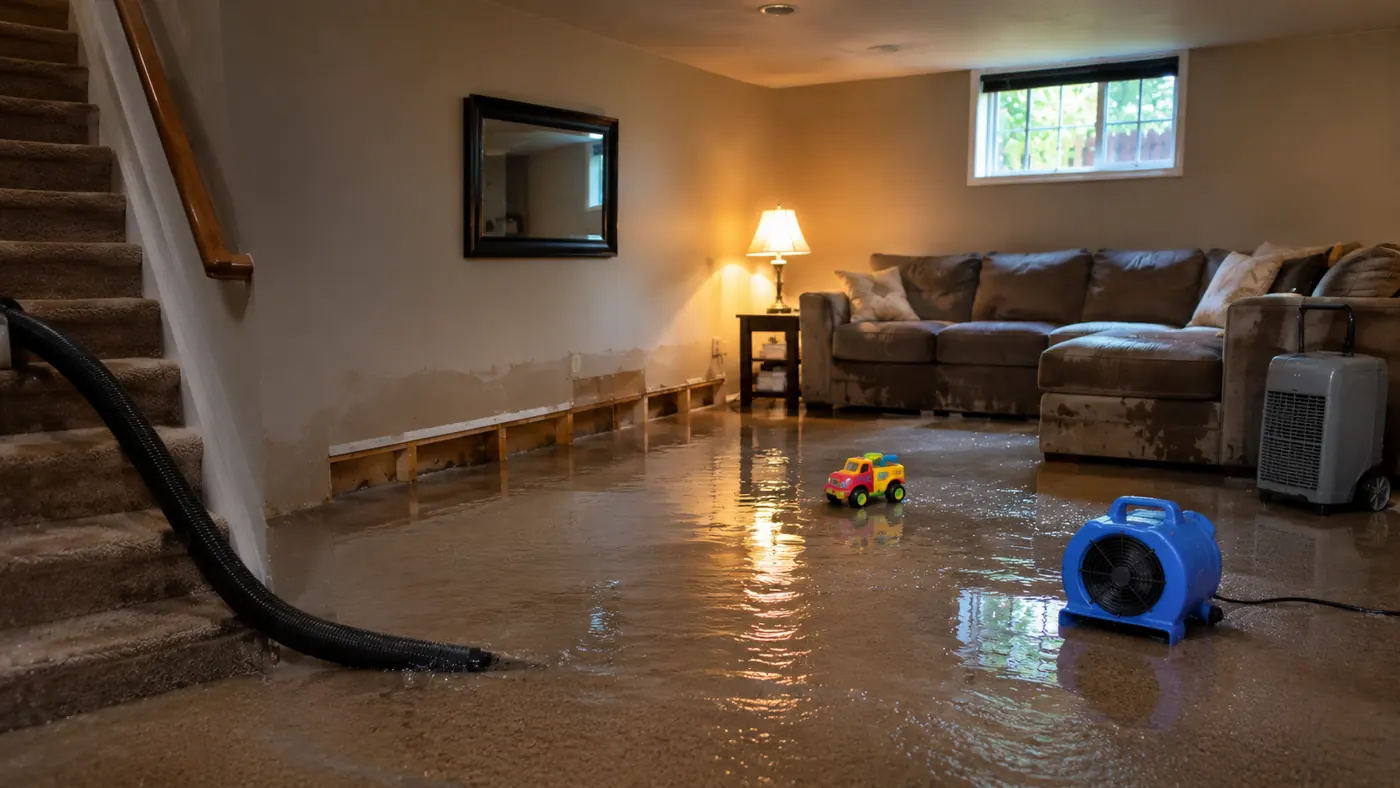
| Basement | Pump, extract carpet, cut wet drywall, set drying equipment | Flooded basement cleanup |
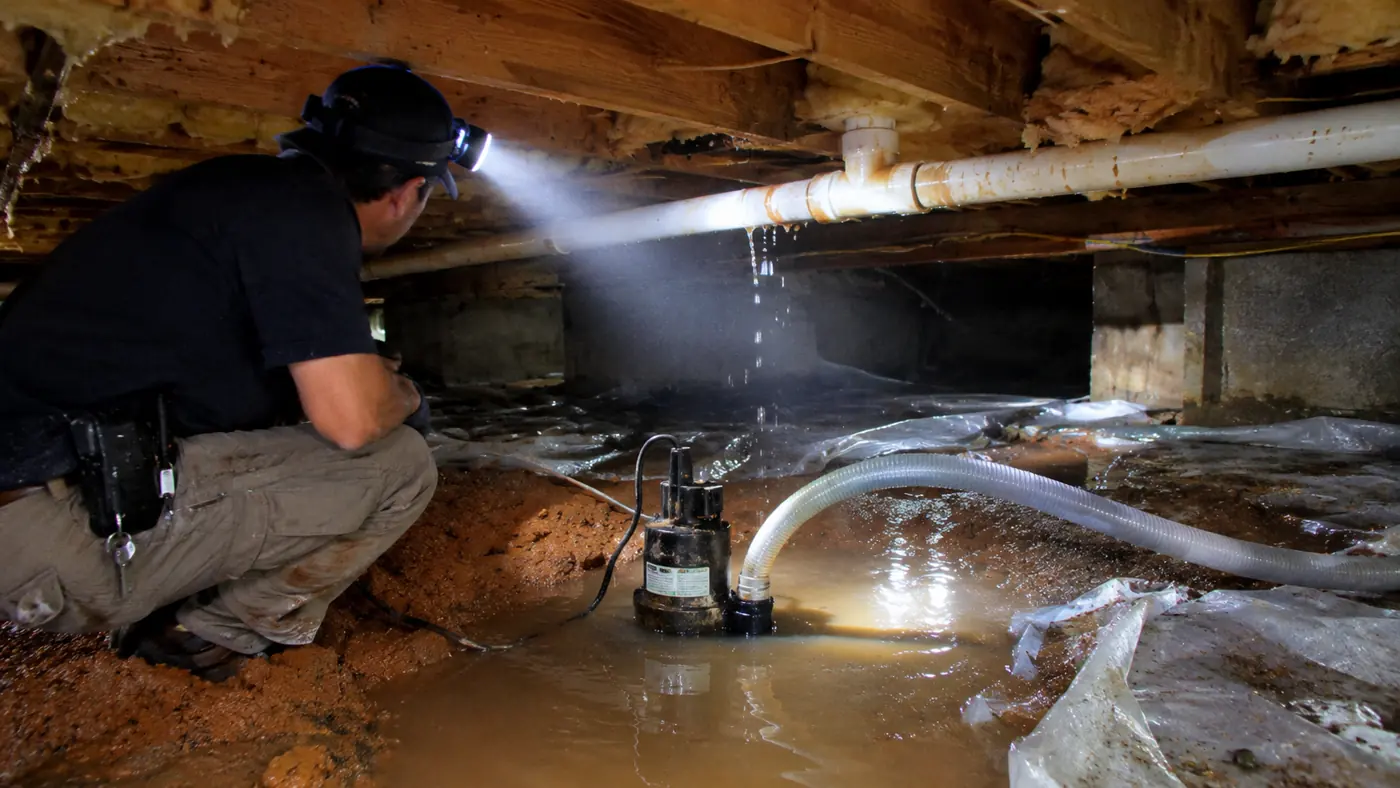
| Crawlspace | Pump, remove wet insulation, dry the dirt and the air, check the floor above | Crawlspace water removal |
| Attic or ceiling | Remove wet insulation and drywall, dry the framing | Ceiling water damage |
| Commercial building or sprinkler line | Extraction, drying and documentation for the property manager | Commercial water damage |
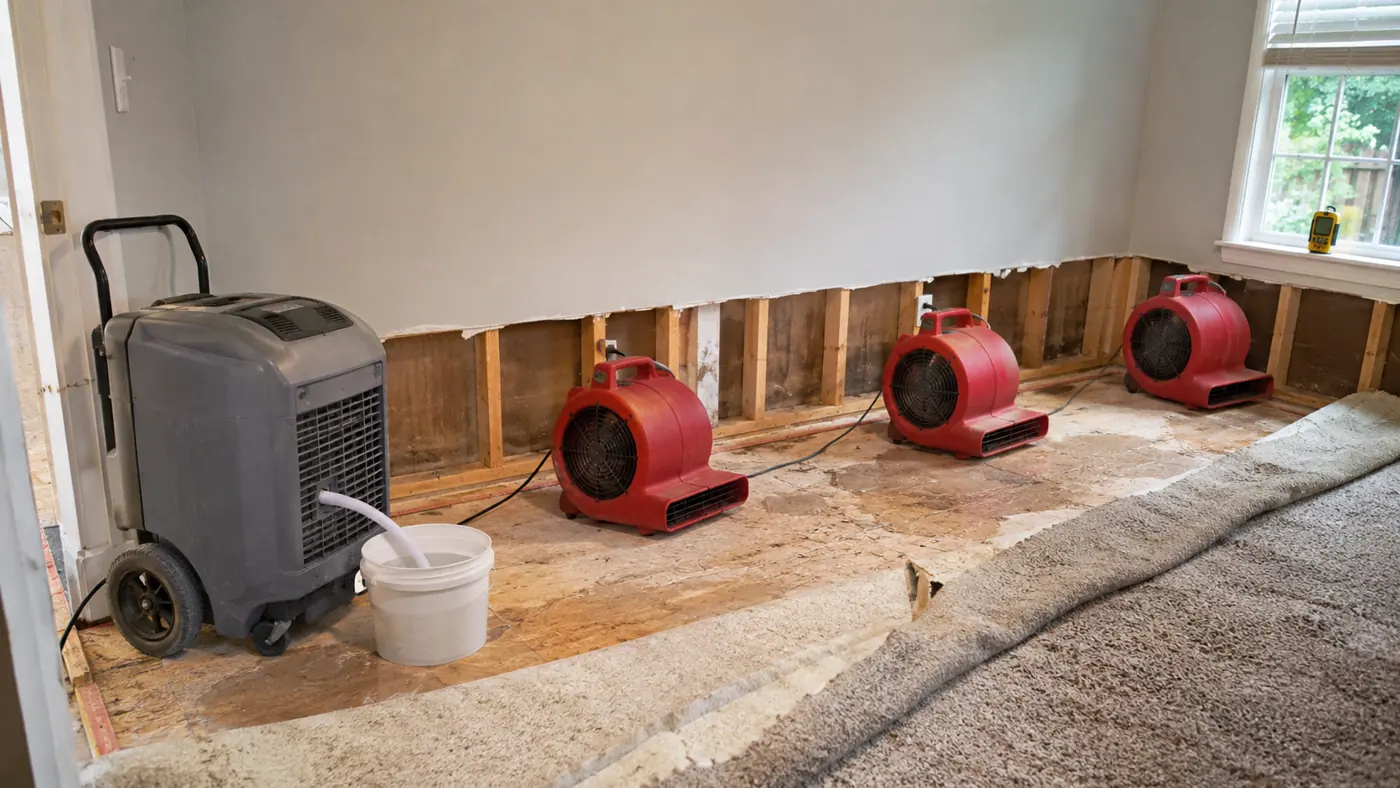
Cold buildings dry slowly, because cold air holds little moisture. Crews add heat where they can and use dehumidifiers suited to cool spaces, and they take readings on each visit instead of trusting how the room feels. Skipping that step is how a winter loss turns into a spring mold problem. See structural drying and mold removal for what is involved.
What happens when the pipe burst while no one was home
A split that runs for days in an empty house soaks far more than one caught in an hour. If someone comes home to water, the sequence is the same but the stakes are higher. Shut off the main before walking through it, stay out of rooms where water is near outlets or the panel, and photograph from a dry spot. Water that has run for days can reach the ceiling below and the subfloor, so the sooner drying starts the more of the house can be saved. If water sat for more than a couple of days, mold becomes a real possibility. See mold removal.
What it costs
Two planning examples show the range. A 600 square foot basement with clean water found within the first day, carpet out and drywall cut over two feet runs about $3,700 to $8,300 for the water side. A 1,000 square foot crawlspace found after one to three days, with wet insulation removed, runs about $4,650 to $12,600. The plumber's repair is priced by the plumber, and repairs to drywall, paint and flooring are priced after drying. The guide to water damage restoration cost shows how those numbers are built.
Insurance and a burst pipe
Many homeowners policies cover sudden burst-pipe damage and exclude slow leaks, so the difference matters. Document the date it was found, keep the broken pipe section if the plumber removes it, and take photos before cleanup. Coverage is the insurer's decision, and moisture logs and photos support the claim. The full process is in the guide to water damage insurance claims.
Apartments, rentals and HOAs
A burst pipe in a multi-unit building raises questions about responsibility. A pipe inside a unit's wall may belong to the unit owner, while a shared riser belongs to the association. Renters should report the leak to the landlord in writing and photograph the damage. In a condo or townhome, the association and the owner each have insurance for different things, and a leak may damage several units. Notify everyone who may be affected, and keep records of the source and the wet areas.
Long-term fixes
If a pipe froze once, it will probably freeze again under the same conditions. A burst is a good time to fix the cause, not only the pipe.
- Move or insulate lines that run through exterior walls, crawlspaces and garages.
- Add heat tape rated for plumbing on exposed lines, following its instructions.
- Seal gaps where lines pass through walls and the foundation.
- Consider leak sensors and an automatic shutoff valve, which limit how much water a burst can release.
- Install foundation vent covers and close them for cold snaps.
- Write down the shutoff location and the plumber's number where everyone can find it.
Wet crawlspaces are a common place for freezes and long-running leaks. The guide to wet crawlspaces on Georgia red clay explains both.
Power outages and winter storms
A power outage during a freeze removes the heat and can take down sump pumps and well pumps. If the heat may be off for a long time, open faucets to a slow drip, keep interior doors open so warm air circulates, and consider shutting off the main and draining the lines if the house will be cold for days. When power returns, check for leaks as the house warms and the ice melts.
The same patterns show up across the nearby towns. Local notes on housing, water and terrain are on the pages for Acworth, Marietta, Woodstock, Fair Oaks, Emerson and Smyrna.
Questions people ask about frozen and burst pipes
Should the plumber or the cleanup crew be called first?
The plumber for the repair, and a crew for the water. If the line is still flowing, shut off the main and call both.
How cold does it have to get for pipes to freeze?
Pipes in unprotected spaces can freeze when temperatures drop to the low 20s or below for several hours. Wind and exposure matter, and a pipe in an exterior wall can freeze sooner than one in the middle of the house.
Should faucets drip?
On hard-freeze nights, yes, especially on lines along exterior walls. A slow drip keeps water moving. It does not protect a line that is fully exposed to wind, so insulate those.
What if the burst is found days later?
Shut off the main, keep out of rooms where water is near outlets, take photos and call a plumber and a cleanup crew. Water that has run for days can reach the ceiling below and the subfloor, so the sooner drying starts the better.
Can plastic pipe freeze?
Yes. Flexible plastic pipe such as PEX is less likely to split than copper, but the water inside can still freeze and block the line.
Is it safe to use a space heater to thaw a pipe?
Only with great care, well away from anything flammable, and never left alone. A hair dryer or warm towels are safer.
Will insurance pay for a burst pipe?
Many policies cover sudden burst-pipe damage and exclude slow leaks. The policy decides, so ask the insurer and keep photos and records.
Sources: Atlanta News First, Dec. 24, 2022; GPB, Dec. 27, 2022; Atlanta climate and extremes, NOAA 1991 to 2020 normals as tabulated on Wikipedia.
About this guide. Written by the Kennesaw DryOut team for homeowners in Kennesaw and Cobb County, Georgia. It is general information, not professional, legal or insurance advice, and figures are planning ranges, not quotes. Last updated October 21, 2026.