
Structural drying is the part of a water job that happens after the visible water is gone. Air movers and dehumidifiers pull moisture out of drywall, framing, subfloors and insulation until meters show the materials are dry. Skipping it is how a clean-looking room ends up with mold in the wall.
In a Kennesaw July the air outside can be wetter than the air in your wet basement, so opening the windows to dry a flooded room often adds moisture instead of removing it. That is one of the reasons drying is done with equipment that controls the air and not with the weather. Drying is a measured process, not a waiting game.
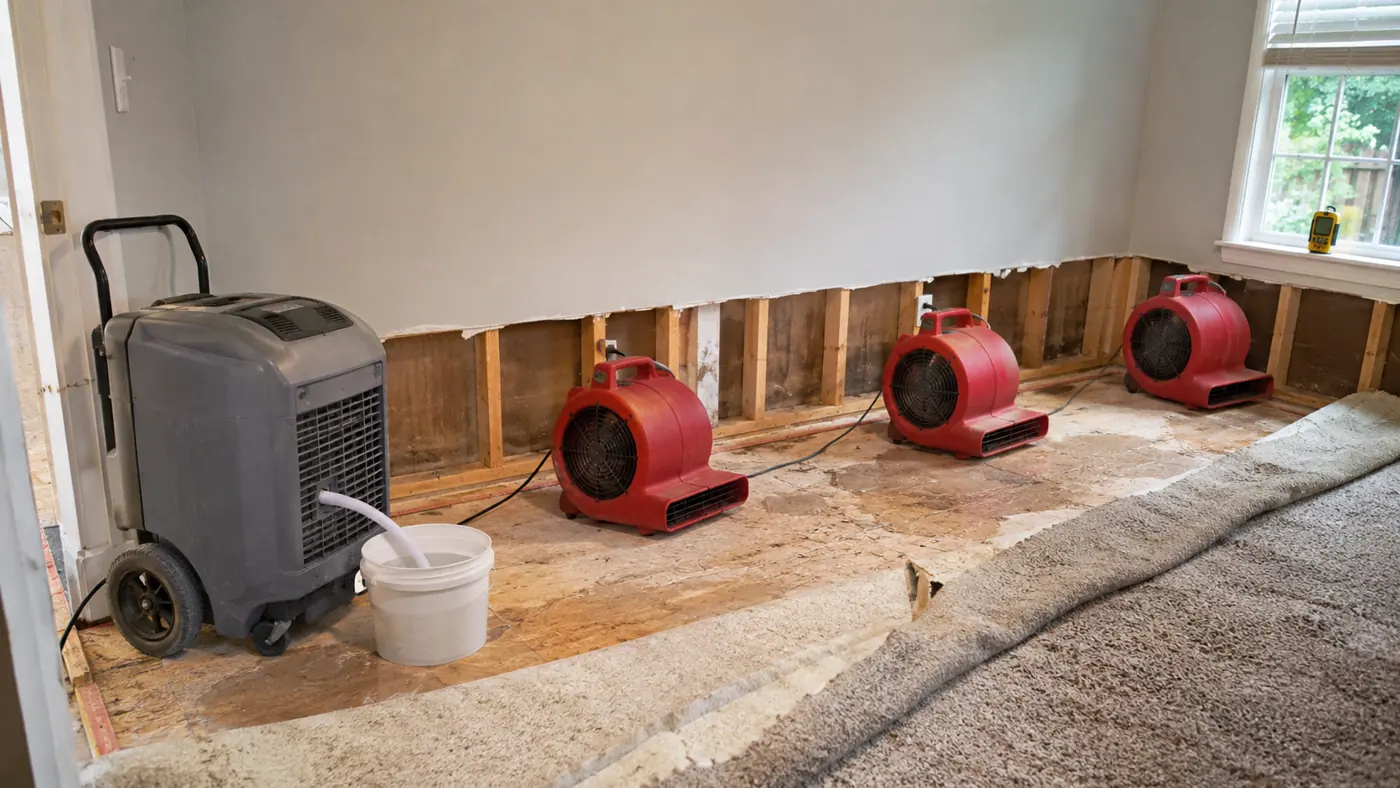
Drying wet walls after a leak
When water gets into a wall, it wicks upward in drywall and soaks into the bottom plate and studs. We start with moisture mapping: a meter on the drywall surface, a thermal camera to spot cold wet zones, and, where needed, a small inspection hole. If the drywall can be saved we may drill small holes near the baseboard or remove the baseboard so air movers can push air into the cavity. If it cannot, we flood cut, which means cutting the drywall along a line above the wet area, usually two feet up. Flood cuts expose the framing so it can dry fast.
How dehumidifiers and air movers work together
Air movers do not dry anything on their own. They sweep dry air across wet surfaces and move the moist air off them. Dehumidifiers take that moist air and condense the water out. LGR dehumidifiers are built for the wet, warm conditions of a water job and keep removing moisture even as the room dries. The two together create a loop: wet material gives up water to the air, the dehumidifier takes it out, and the loop continues until the materials stop giving up water.
A drying set is sized to the room's volume and the amount of wet material, not to the floor area alone. Too few air movers leave dead zones. Too many waste power and can overheat a small room. We adjust the setup at each visit based on readings.
Choose this when
- Walls, floors or framing were wet, even if the standing water is gone.
- Extraction is done and the room still feels damp.
- Hardwood has started to cup or crown.
Not the right fit
- There is still standing water. Start with water extraction.
- You already see mold growth. See mold removal.
- Only a ceiling is stained. See ceiling water damage.
Subfloor drying
Subfloors are plywood or OSB under your flooring, and they hold water longer than the surface above them. Hardwood over a wet subfloor can cup within days. We dry subfloors by lifting a few boards or removing the flooring where needed, or by using drying mats that pull moisture through the floor. Which one depends on the floor type and how long it was wet. A subfloor reading is the last reading we trust before we call a floor dry.
How long does it take to dry out a house?
Most jobs take three to five days of equipment. Thick framing, hardwood, crawlspaces and jobs where the water sat longer than a day take longer. We measure, not guess. The table shows what we record each visit and what it tells us.
| Reading | What it measures | Why it matters |
|---|---|---|
| Moisture content of drywall and wood | Percent moisture in the material itself | Compared to dry reference material in an unaffected part of the house |
| Relative humidity and temperature | Conditions in the drying room | Tells us if the dehumidifier is keeping up |
| Grains per pound | Actual water vapor in the air | A better guide than relative humidity as temperature changes |
| Thermal image | Surface temperature differences | Shows wet areas behind walls without cutting |
Georgia humidity and how it slows drying
Georgia humidity is the big one. Summer outdoor air is warm and moist, so a house with open windows and no equipment can stay damp for a long time. Winter is the opposite: dry air helps, but a house with the heat off after a burst pipe cools down and slows drying. Crawlspaces on red clay add a third factor, because the ground itself keeps feeding moisture into the space. We often dry the crawlspace air and the dirt surface at the same time, and only then call the floor above dry.
The drying loop
Drying is not set and forget. We repeat the same loop each visit until the readings say dry.
What you will see and hear
Drying equipment is loud and the rooms run warm. That is normal, because warm, moving air is how water leaves the wood and drywall. Keep the heat or air conditioning on as you normally would, and do not unplug equipment or move it to make a room tidier. If a unit trips a breaker or stops, call us. A crew comes back each day to read the meters, adjust the setup and take equipment out of areas that have reached dry.
What structural drying costs
Drying is the largest part of most water jobs. In our planning model, drying, equipment and monitoring runs $3.00 to $5.00 per square foot for clean water and rises with contamination, time before discovery and difficult access.
| Scope | Planning range |
|---|---|
| Drying line only, one room (200 sq ft), clean water | $600–$1,000 |
| Three rooms (600 sq ft), clean water, carpet out, flood cut under 2 ft, extraction not needed | $2,850–$5,900 |
| Subfloor drying under hardwood | Quoted after meters, adds days |
Planning ranges, not a quote. A written scope after an on-site look is the only real number. Call (678) 940-0778. Run the calculator.
Sources: Angi; Fixr; HomeAdvisor.
Structural drying questions
Why can't I just run my own fans and a store dehumidifier?
A household dehumidifier is not sized for a wet building. Fans without a dehumidifier push moisture around. Meters are what tell you when the wall is done.
Why are you cutting my drywall if it looks fine?
Drywall can look dry and still hold moisture behind the paint. Flood cuts are done where meters and the thermal camera show wet material, and we cut as little as we can.
Is the noise normal?
Yes. A drying set runs 24 hours a day for several days. We can place equipment to keep bedrooms as quiet as possible.
What happens if I stop early?
Wet framing can grow mold inside a closed wall, and wood and flooring can warp. That is the most common reason people call us back months later.
Related services
Water on the floor right now? Call us. (678) 940-0778